
Metal Studs vs. Wood Framing: Which Is Right for Your Next Build?
Summary:
This blog post compares metal studs and wood framing, outlining their pros and cons related to elements, cost, and installation. Choosing the best material based on project type and climate. Ultimately, the builder's decision depends on specific goals, such as fire safety, project scale, and long-term maintenance versus upfront costs.
You’ve got a project in mind. Maybe it’s a new shed. A garage. A cabin in the woods. Or maybe you’re thinking bigger—like building your next home.
Whatever the plan, one question always shows up early:
Should you frame it with wood or go with metal studs?
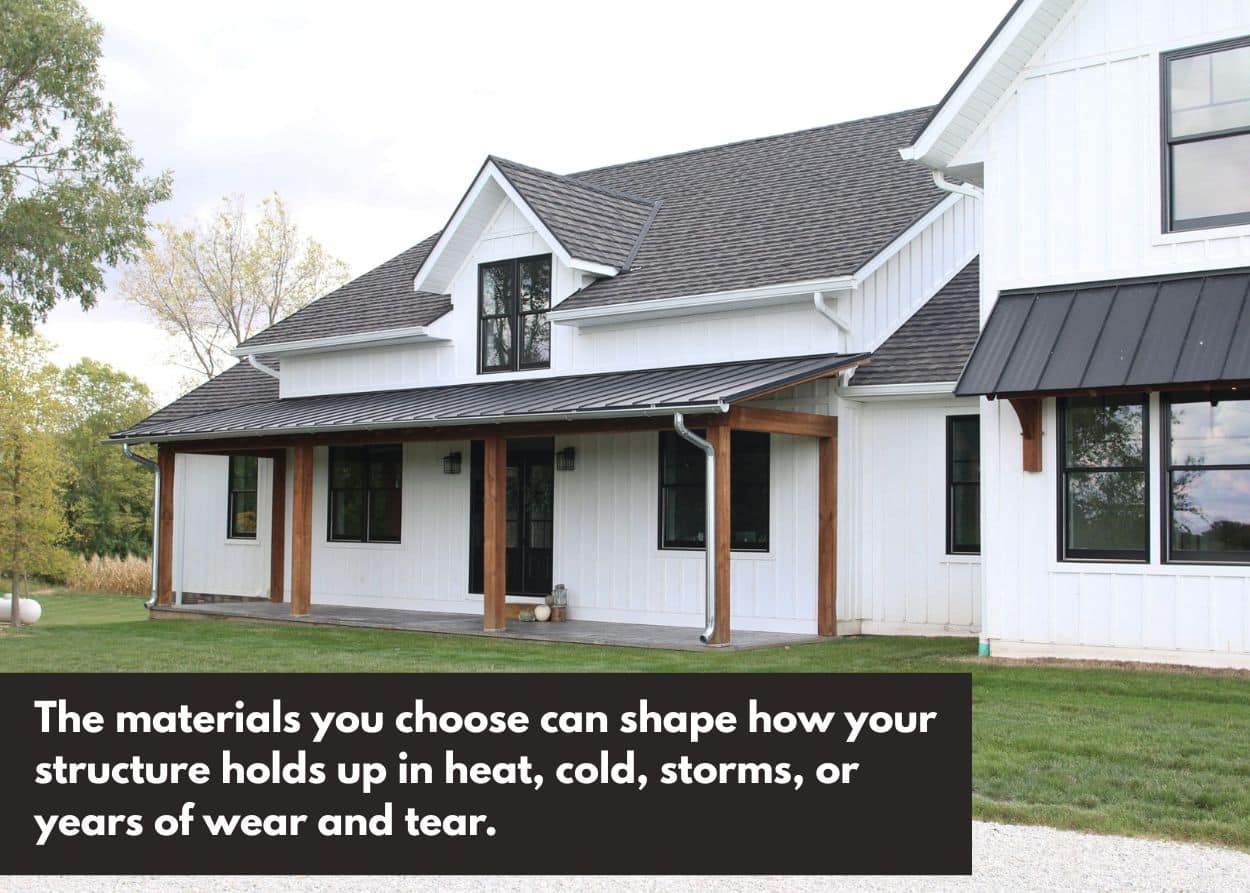
It’s not just a matter of price. The materials you choose can shape how your structure holds up in heat, cold, storms, or years of wear and tear. And if you’re not in construction every day, it’s hard to know what really matters.
That’s where we come in.
At K. Graber Construction, we’ve seen both options up close. We’ve built with them. Repaired them. And watched how they age. So in this post, we’ll break down the differences in a way that’s simple, practical, and honest.
Because your building deserves more than guesswork.
Let’s take a look at how metal studs stack up against traditional wood framing.





Built to Last: How Wood and Metal Handle the Elements
No one wants to build a structure only to patch it up a few years later. You want materials that stand up to the test of weather and time.
Let’s start with wood.
Wood: Strong and Familiar… But Vulnerable
There’s a reason wood framing has been around for centuries. It’s strong. It’s flexible. And it’s easy to work with. If you’ve ever seen a traditional house go up, chances are it was framed with wood.
But wood comes with some baggage.
- Moisture is its biggest enemy. If framing gets wet and doesn’t dry properly, rot sets in. And once rot begins, it spreads.
- Pests love it. Termites, carpenter ants, even beetles—they all see untreated wood as an open invitation.
- Fire risk is also a factor. While many homes include fire-retardant treatments, wood is still a combustible material.
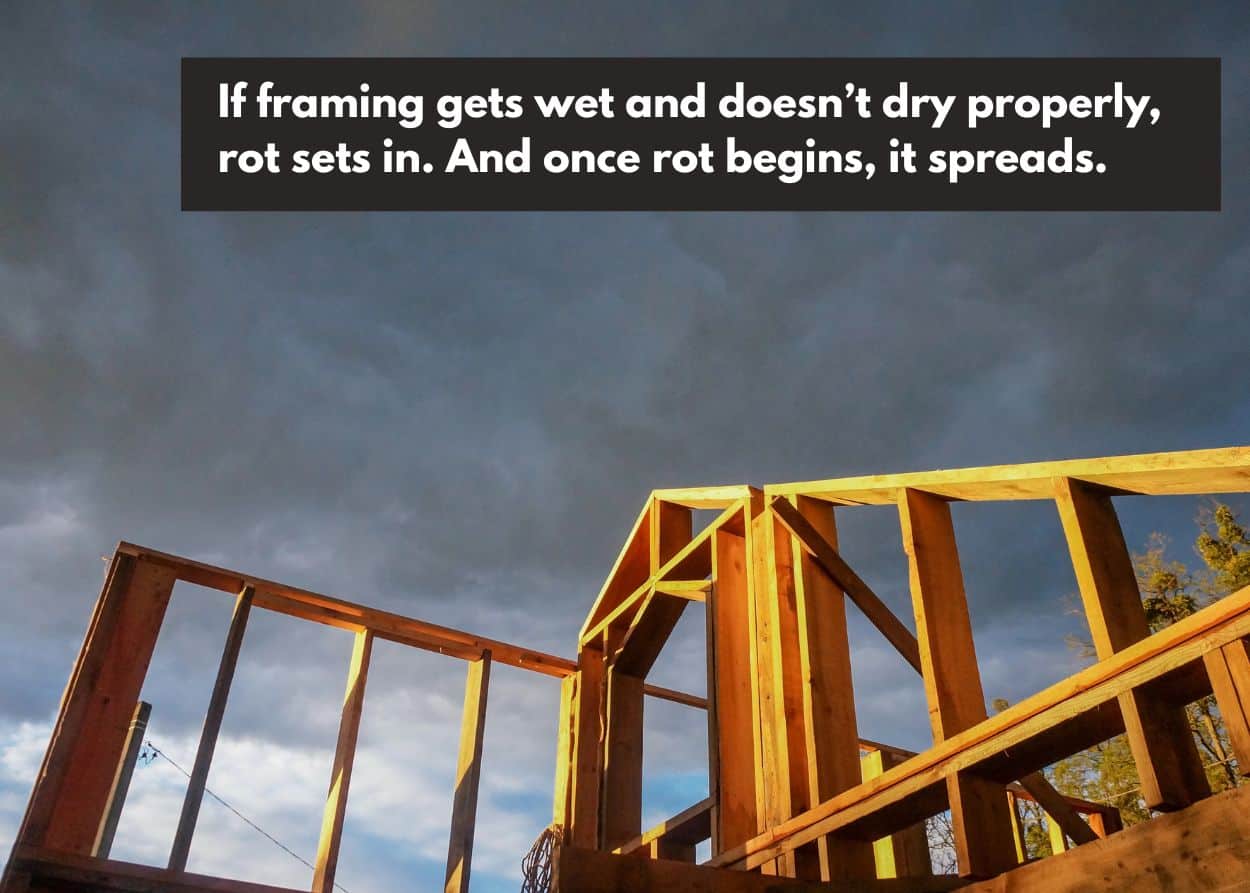
In dry, moderate climates, these issues might not cause much concern. But if your structure is exposed to dampness, humidity, or critters, wood will need protection and ongoing attention.
Metal: Resistant, Reliable, and Low Maintenance
Now, steel doesn’t have the cozy, natural feel that wood does. But when it comes to resistance, metal studs pull ahead in some key areas.
- No rot. Metal doesn’t absorb moisture the way wood does. You won’t have to worry about hidden mold or soft framing.
- Termite-proof. Pests can’t chew through steel.
- Fire-resistant. In high-risk fire zones, metal adds a layer of safety that wood can’t.
That said, metal isn’t magic. It can corrode if exposed to moisture over long periods—especially in coastal areas or if not properly sealed. And dents can happen, particularly during transport or handling.
But the payoff? Low maintenance, long-term reliability, and peace of mind in harsh conditions.
The Cost Question: What Are You Really Paying For?
Now let’s talk money.
It’s easy to think cost is all about the price tag on a 2x4 or a steel stud. And sure—that matters. But if you're building something meant to last, the upfront cost is just the beginning of the story.
Wood: Cheaper Now, Maybe Not Later
Walk into any lumber yard and you’ll likely find wood framing is the more affordable option. It’s widely available, familiar to most contractors, and cheaper per unit than steel. That’s a win if you're watching your budget.
Add to that:
- Simpler tools. No need to invest in specialized gear.
- Faster labor. Most framers can fly through a wood build.
For basic jobs or quick turnarounds, wood often comes out ahead.
But here's the catch: it doesn't always stay that way.
If your framing gets damp and starts to rot, or if pests move in, you'll be looking at repairs. Maybe even replacements. That cheap frame? It could cost more in the long run.
Especially if:
- You’re building in a humid climate
- You’re not sealing or treating the wood
- You want low maintenance for years to come
Metal: Pricier Upfront, More Predictable Over Time
Steel studs tend to cost more per linear foot. That’s true. But depending on your project, the long-term numbers might surprise you.
Why?
- Less waste. Metal studs are uniform and straight. No knots. No warped boards. Less sorting, less tossing.
- Lower maintenance. No rot. No pests. Fewer surprises.
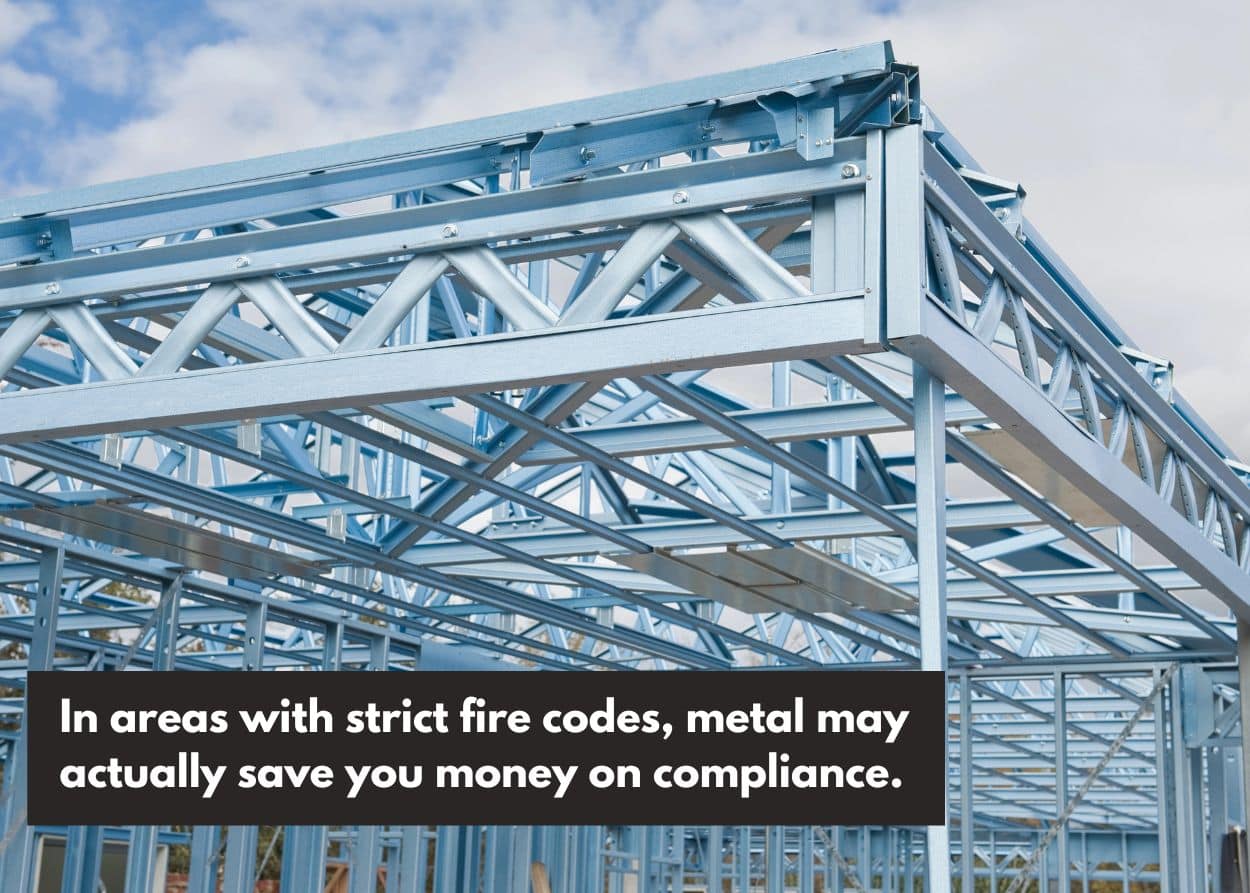
- Fire-rated builds. In areas with strict fire codes, metal may actually save you money on compliance.
Labor costs can vary. Some builders charge more for metal framing—especially if they’re not used to it. But others find it faster to install, especially on large-scale or commercial projects.
In other words, metal might sting more at the start… but you’re not likely to pay for it again.
The Real Question
So it’s not just about which one is cheaper.
It’s about value:
- How long do you want your structure to last?
- What’s the climate like where you’re building?
- How often do you want to be out there fixing things?
Wood is often cheaper now. Metal might be cheaper over the life of the building.
Installation: Tools, Time & Technique
Let’s say you’ve picked your material. Now comes the real work—getting it up.
The installation process might not be the flashiest part of a build, but it does shape the timeline, the labor costs, and how easy (or frustrating) the job becomes.
And if you’re tackling it yourself? This part matters even more.
Wood: The DIY Dream
Wood is what most builders know. If you’ve ever framed a wall—even a small one—it was probably with dimensional lumber. It’s simple. Straightforward. Forgiving.
You can measure, cut, and adjust as you go. Miss a mark? Grab your circular saw and fix it. Hit a nail wrong? Pull it out and try again.
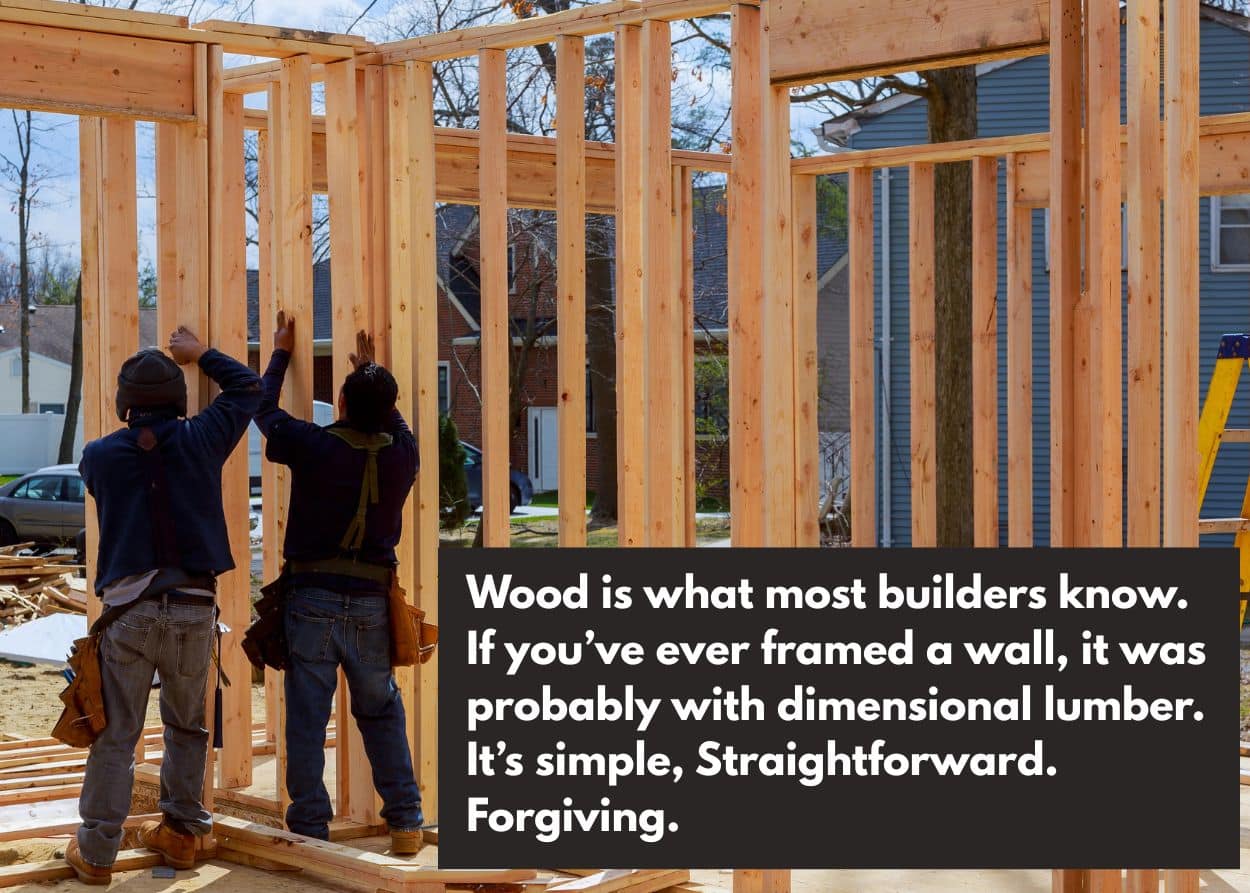
Tools are standard—nail guns, levels, hammers, tape measures. Stuff most people already have in their garage.
That makes wood a favorite for:
- DIYers doing weekend projects
- Framing crews who need to move fast
- Custom builds where you’re adapting on the fly
There’s also something satisfying about working with it. The smell of sawdust. The feel of solid lumber in your hands. It’s not just functional—it’s familiar.
Metal: Clean, Precise, and a Little Picky
Framing with steel is a different experience. You’re not nailing boards together—you’re fastening tracks and studs with screws. It’s cleaner. Straighter. And sometimes… slower.
Metal studs are lighter than wood, which can be nice. But they flex more. That means lining things up takes a little more care.
And the tools? You’ll need a few extras:
- Tin snips or a chop saw with a metal blade
- A screw gun instead of a nailer
- Possibly a crimper to fasten track and studs without screws
It’s not hard, but it is different. And for crews who’ve never done it before, there’s a learning curve.
The upside, however, is that once you’ve got it down, steel framing can move quickly—especially in repetitive layouts like garages or commercial structures.
There’s no warping. No knots. No guessing if a board is true. Every piece is consistent.
So Which Installs Easier?
If speed and flexibility matter—especially for a small crew or solo builder—wood usually wins.
But if you value precision and clean lines, or you’re working on a large-scale project with repeated layouts, metal has the edge.
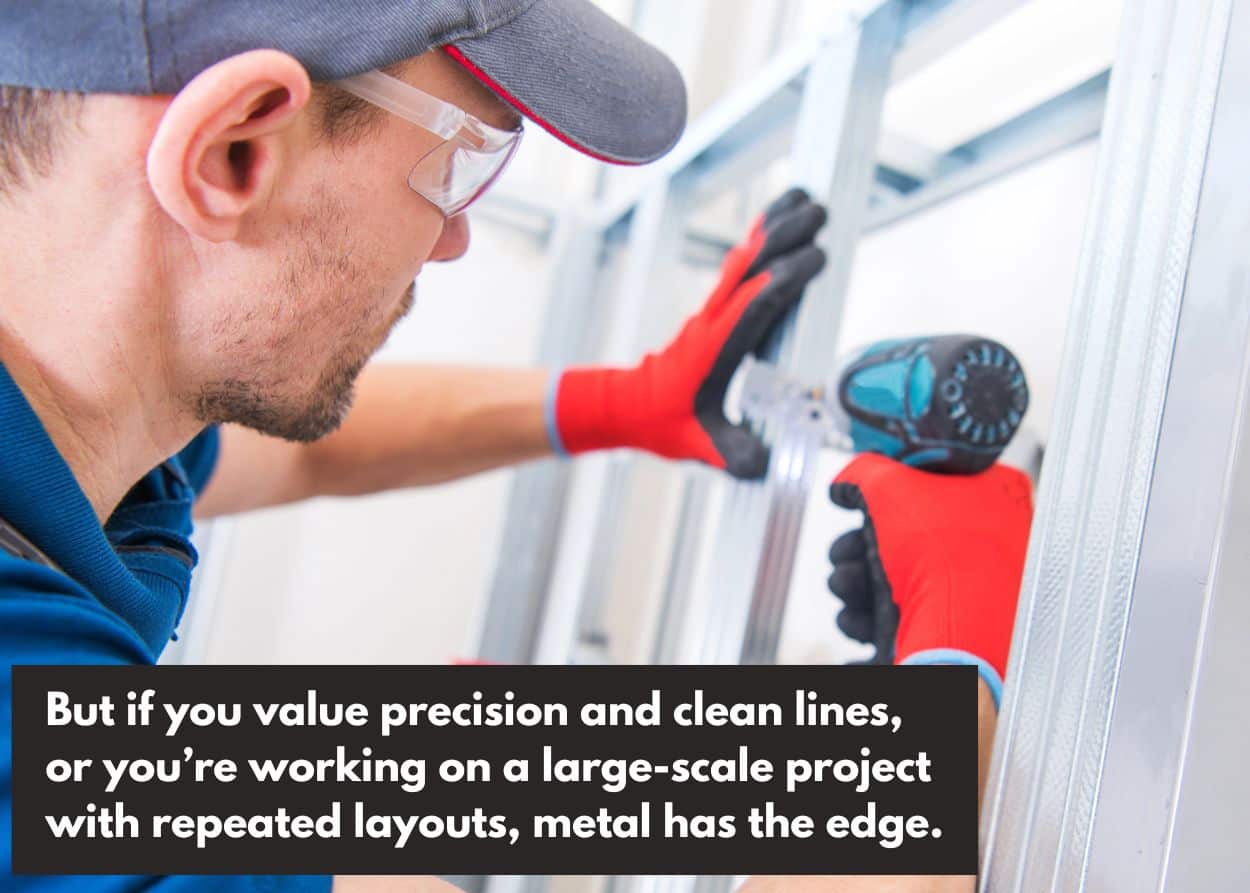
Still unsure? It may come down to who’s doing the work. Some builders swear by wood. Others prefer metal for its consistency. If you’re hiring it out, ask what your crew is most comfortable with. That alone can save you time and cost.
What Works Where: Choosing for Structure and Climate
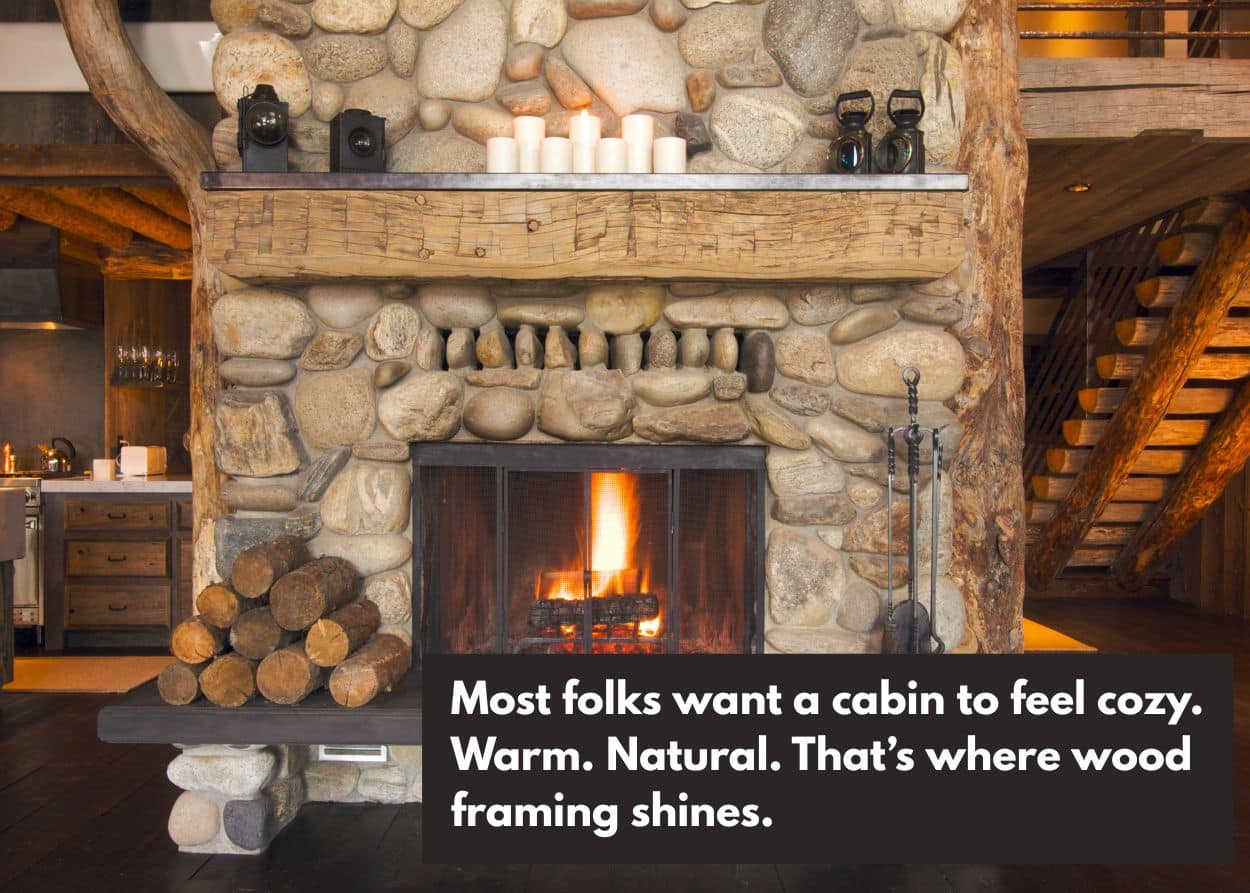
But what if your cabin is off-grid or built in wildfire-prone areas?
That’s where metal framing starts to make sense. You can still finish it in wood, but the underlying frame gives you added resistance to fire, pests, and weather extremes.
It’s a bit more work upfront—but if you’re building something remote that you won’t check on often, metal might give you peace of mind.
Garages & Workshops: Strength and Storage
These spaces need to handle more wear and tear.
- Wood is great for detached garages, especially if they’re attached to a wood-framed home.
- But metal brings big benefits in strength and fire resistance—especially if you’re working with tools, welding equipment, or fuel storage.
Some people frame garages in metal just for the peace of mind that a stray spark won’t start something worse.
And again—if it’s all about utility and not about curb appeal, metal can save you headaches down the line.
New Home Construction: Know Your Codes, Know Your Goals
Wood is still the go-to for single-family homes. It’s easier to build with, more adaptable to complex layouts, and aligns with most local codes and inspector expectations.
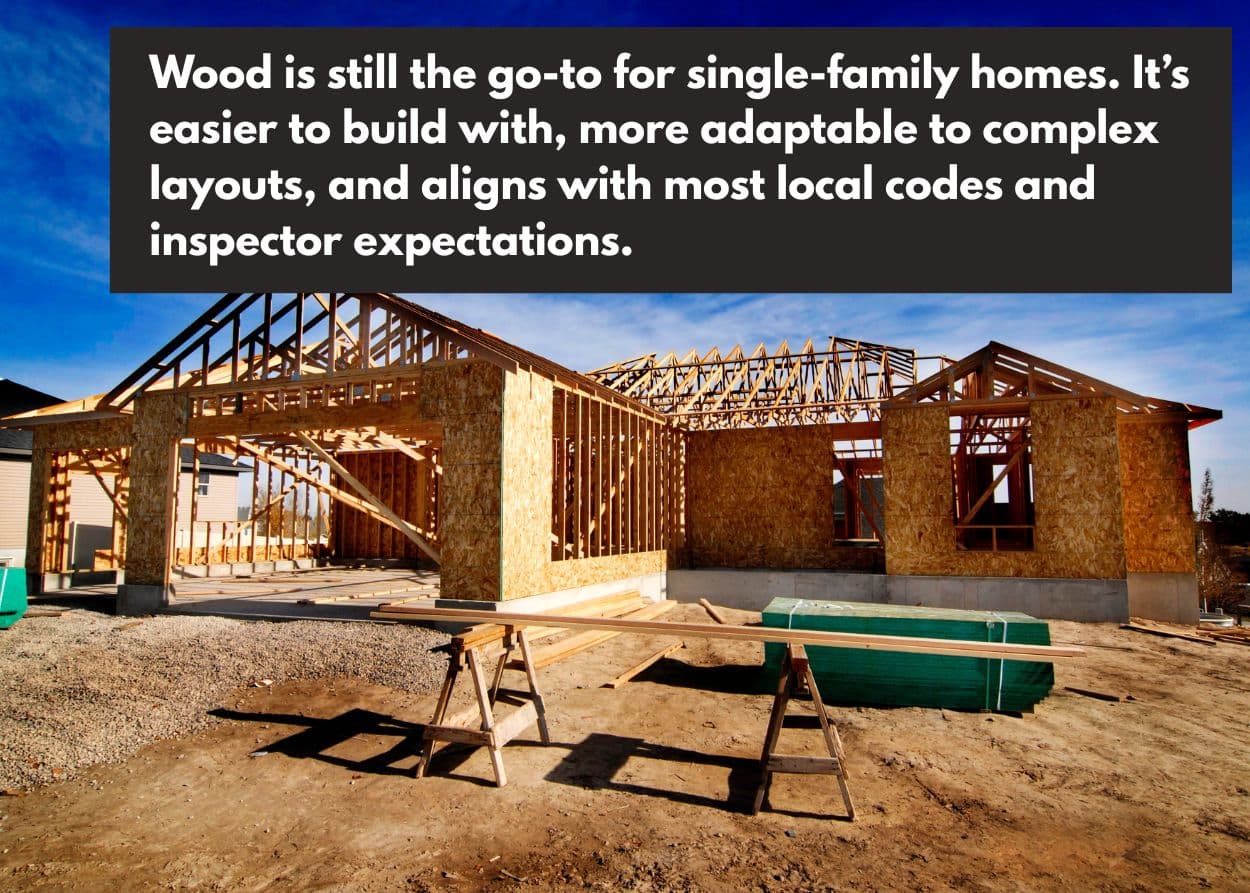
But metal’s gaining traction—especially in places with:
- High humidity
- Termite problems
- Tough fire safety standards
Some custom homebuilders are blending both: using metal in basements or lower levels and wood above. Others stick with wood but treat it with fire-retardant coatings or pest-resistant sealants.
The main takeaway? Don’t just ask, “Which material is better?”
Ask, “What’s better for this structure in this location?”
Because climate, purpose, and risk tolerance all play a role in that decision.
What's the Right Choice for You?
So what’s better—metal studs or wood framing?
It depends.
Wood is familiar, flexible, and great for residential builds. Metal offers serious strength and resistance, especially for climates with pests or high humidity.
Your best choice comes down to your goals:
- Are you building in a fire-prone area?
- Is this a DIY shed or a custom home?
- Do you want lower upfront costs—or lower maintenance long-term?
So what’s your next step?
If you’re still unsure, that’s okay. We’d love to help you think it through.
At K. Graber Construction, we’ve framed projects with both materials. We know what works in our Indiana climate—and what doesn’t. Whether you’re starting from scratch or just trying to make a smart long-term decision, we’re here to help you build something solid.
Reach out today and let us know what you’re planning. We’ll help you figure out the best path forward—frame by frame.
Because it’s not just about building something. It’s about building it right.
If you'd like to continue learning about different types of builds, you might be interested in reading our following articles: